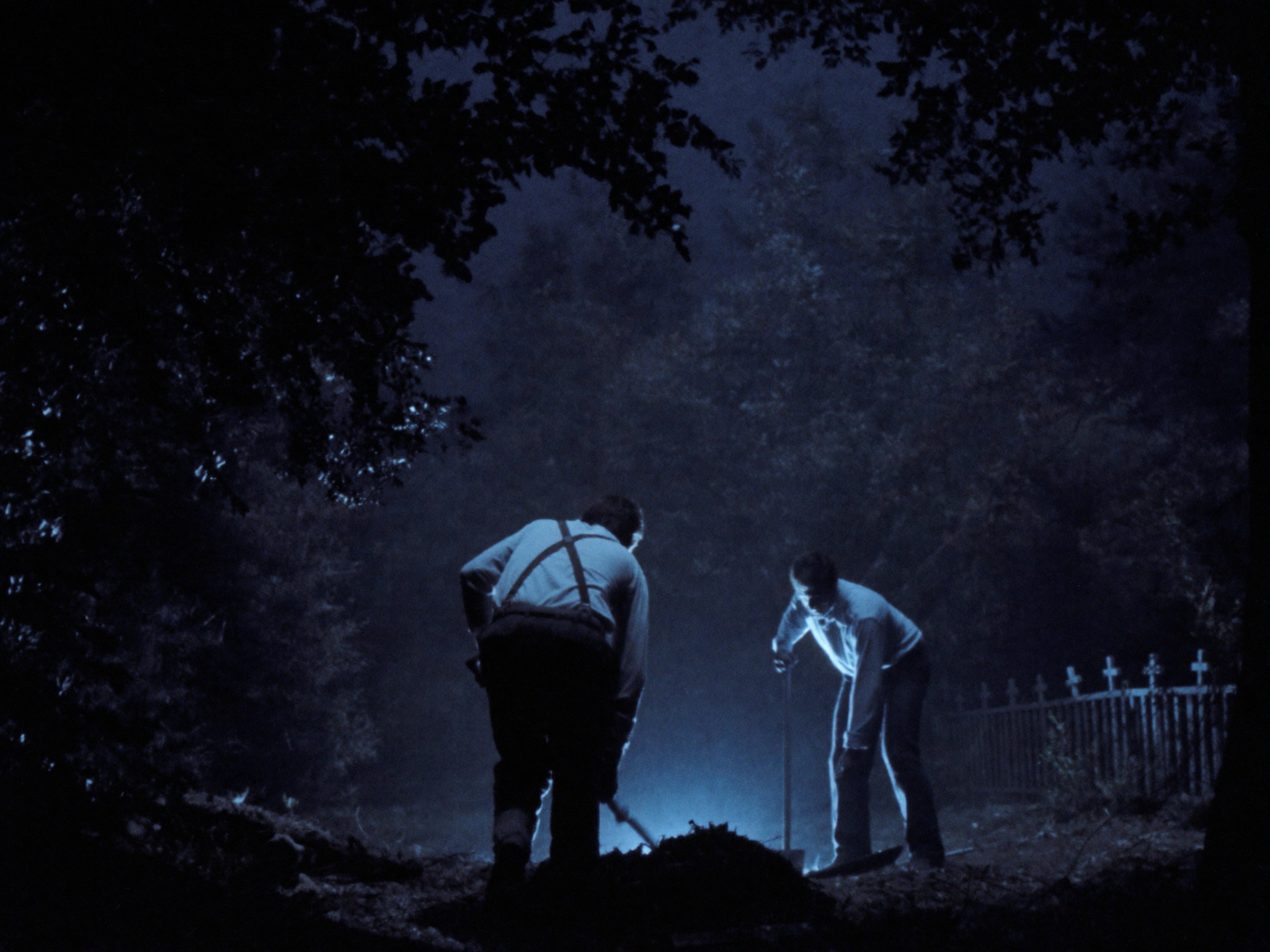
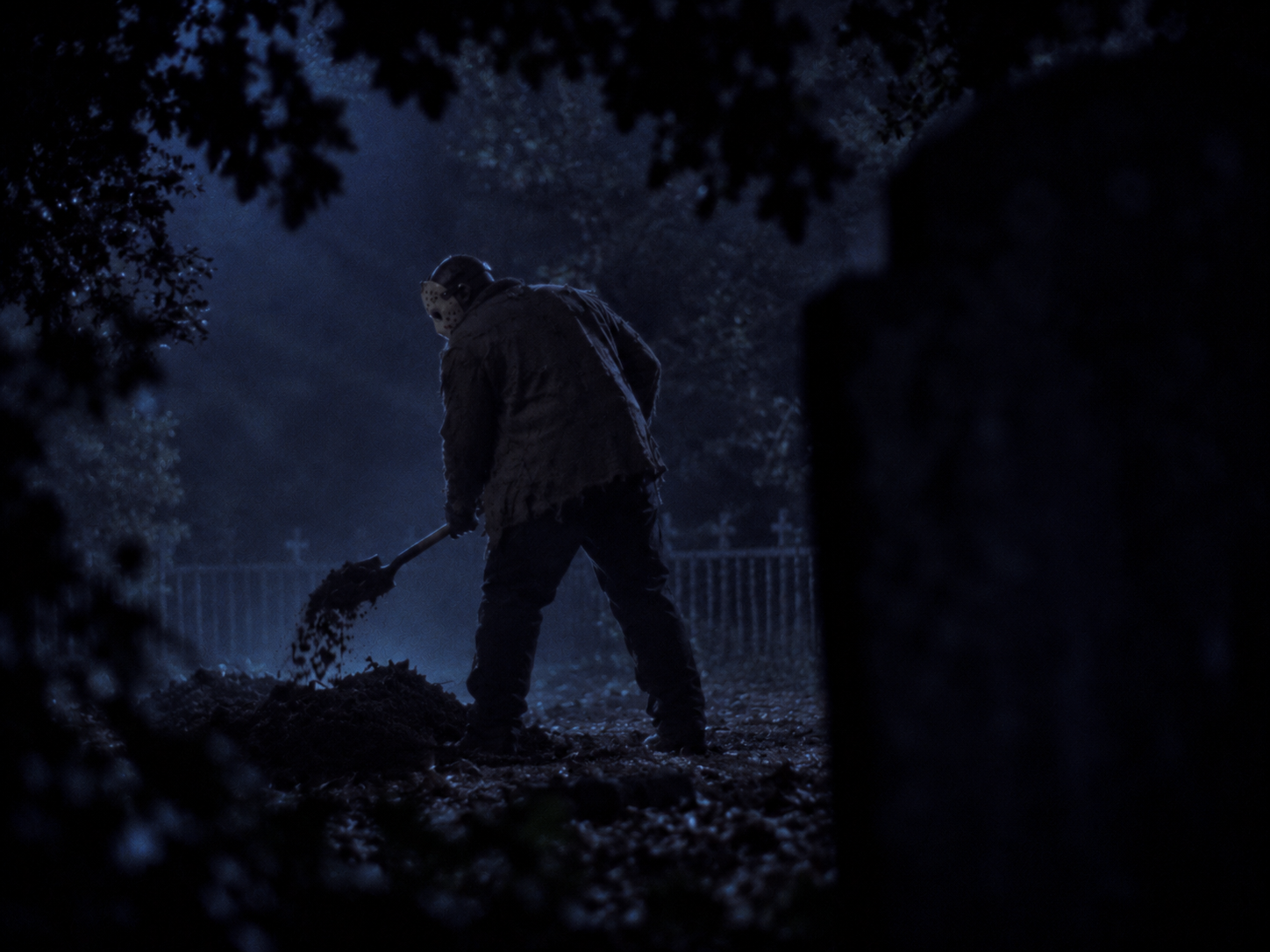
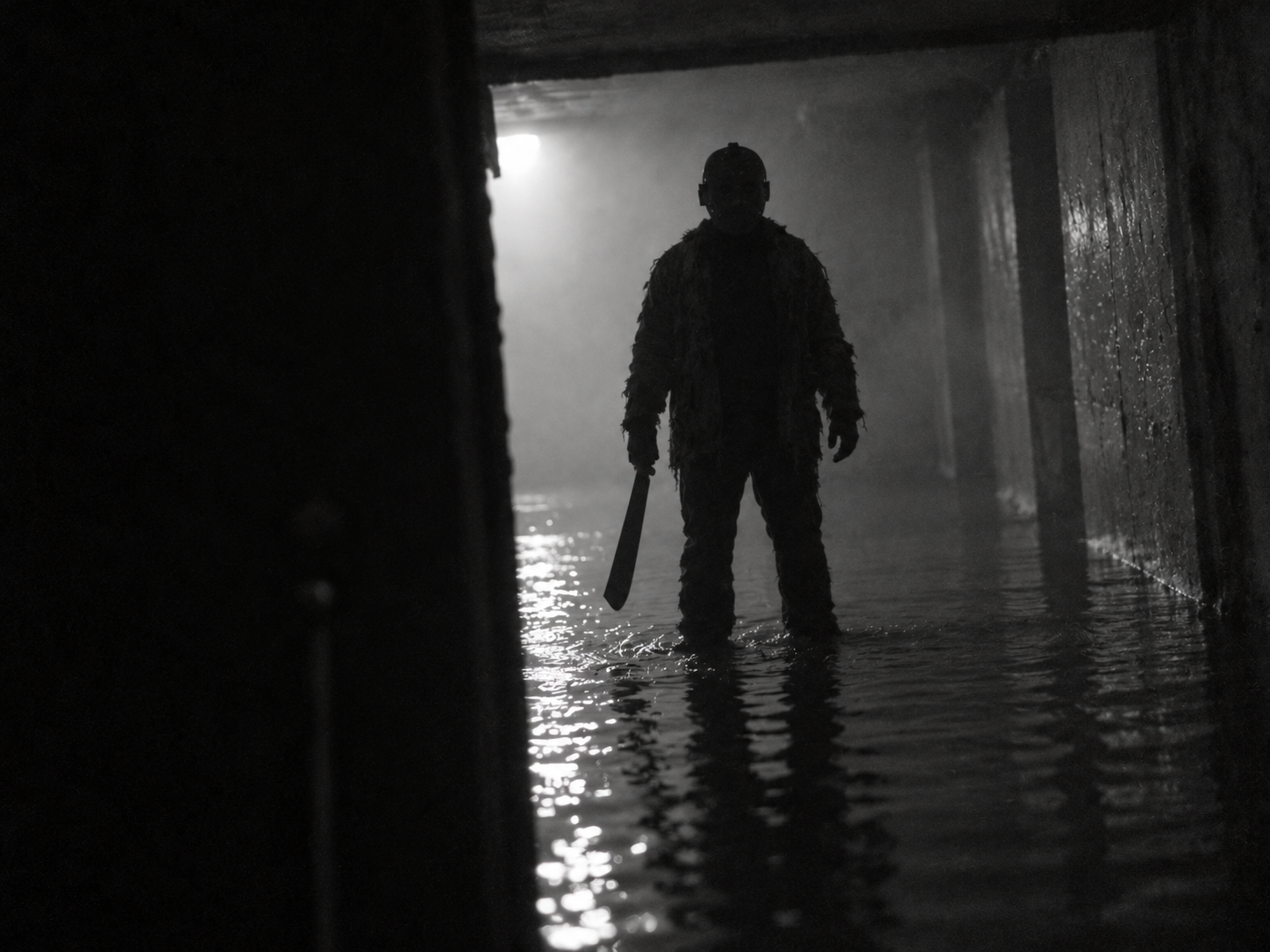
The Industrial Room
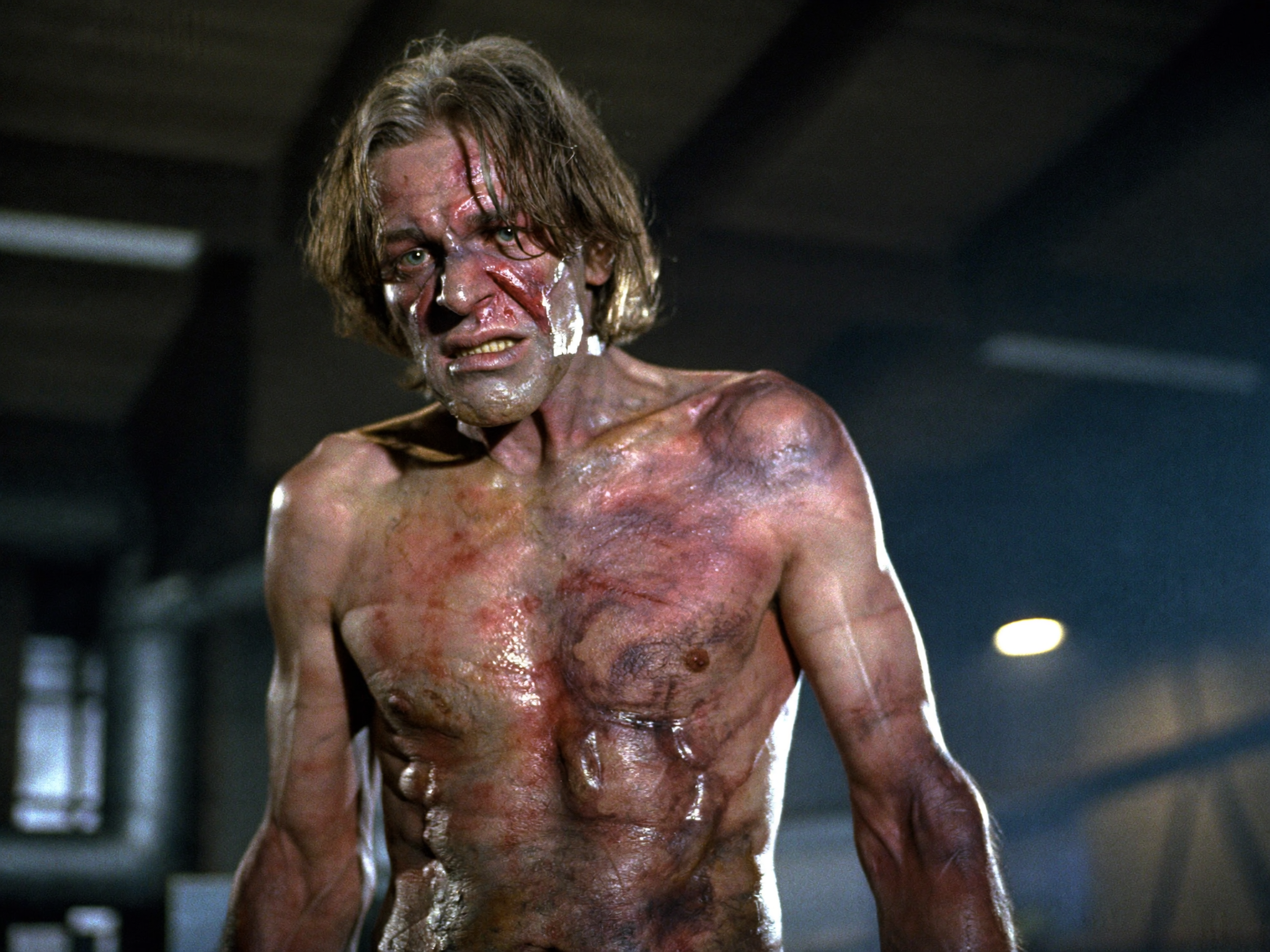
Generate this scene reference first. No Character Sheet is needed for this step.
Download referenceA tight medium shot captures a middle-aged white man seen from a slightly low, eye-level angle in a dimly lit industrial setting. His most striking feature is the extensive and shocking prosthetic makeup covering his entire body; his skin is mottled and grotesque, with a glossy, severely deformed texture and reddish-brown tones simulating extreme burns, blisters, and cellular deformity. His hair is shoulder-length, brown, and messy, accentuating the disheveled appearance. His face is contorted in a grimace, and his prominent cheekbones and sunken eyes give him an intense, tortured yet expressive appearance despite the extreme transformation. The background is a dark, out-of-focus, industrial interior with beams, pipes, and indistinct lights that create bokeh highlights, with cold blue and warm ochre tones that contrast the sickly pink and purple hues of his skin. The lighting is mixed, with a harsh, focused key light from the top left creating specular highlights on the shiny, rubbery makeup and deep shadows accentuating the contours of his deformities, while diffuse blue ambient light fills the shadows. The composition is centered, and the subject is cropped at the bicep. The image has a grainy, distinctly filmic look indicative of late 1980s analog cinema production, with medium grain and limited color saturation. The overall mood is nightmarish, visceral, and grotesque.
HEX VALUES: ["#151916", "#070909", "#152e3c", "#2a231b", "#845e53", "#6b473a", "#4b3022", "#3d3a36", "#9c7268", "#304656", "#b18b84", "#565450", "#647381"]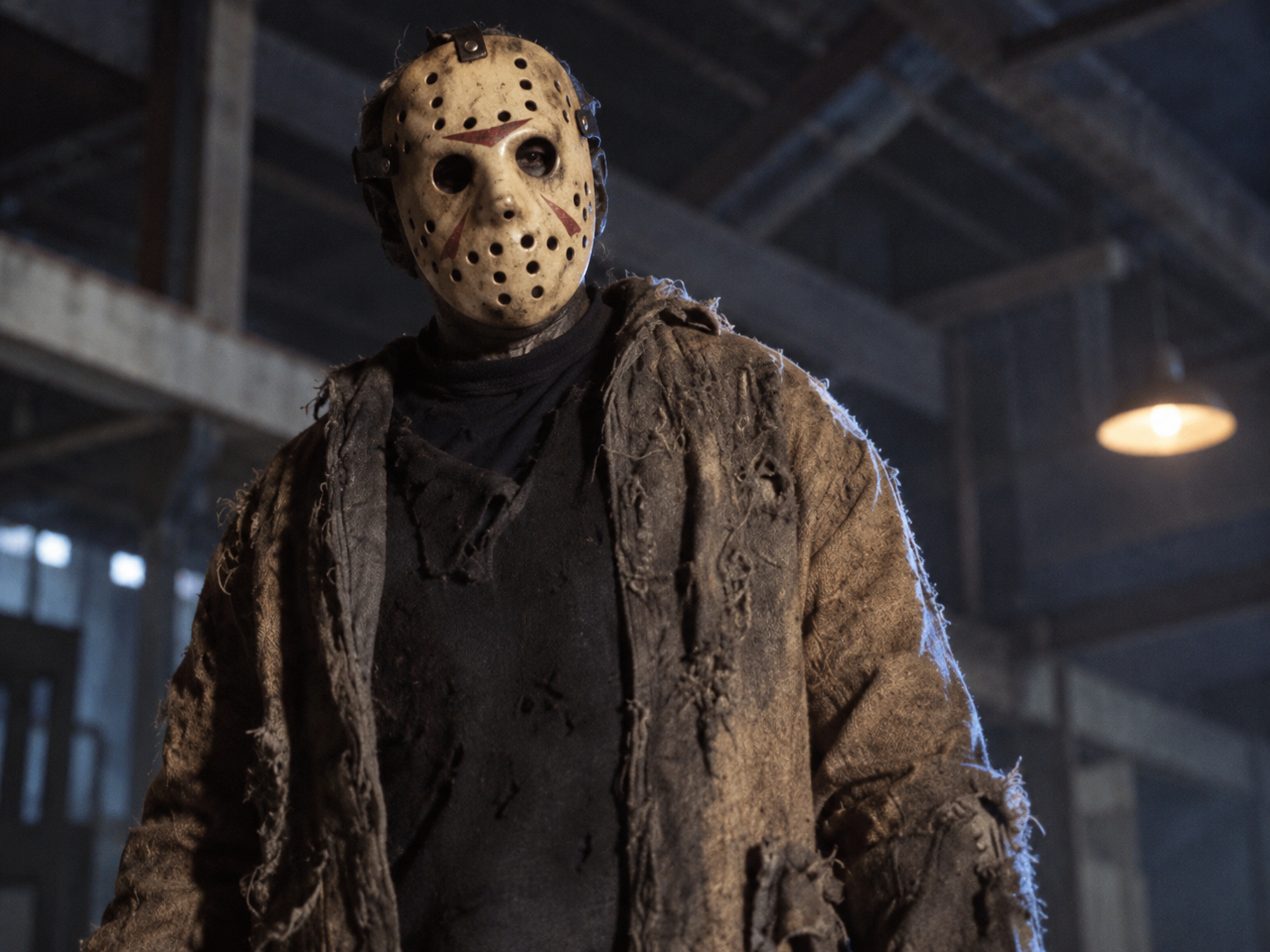
UPLOAD IN THIS ORDER
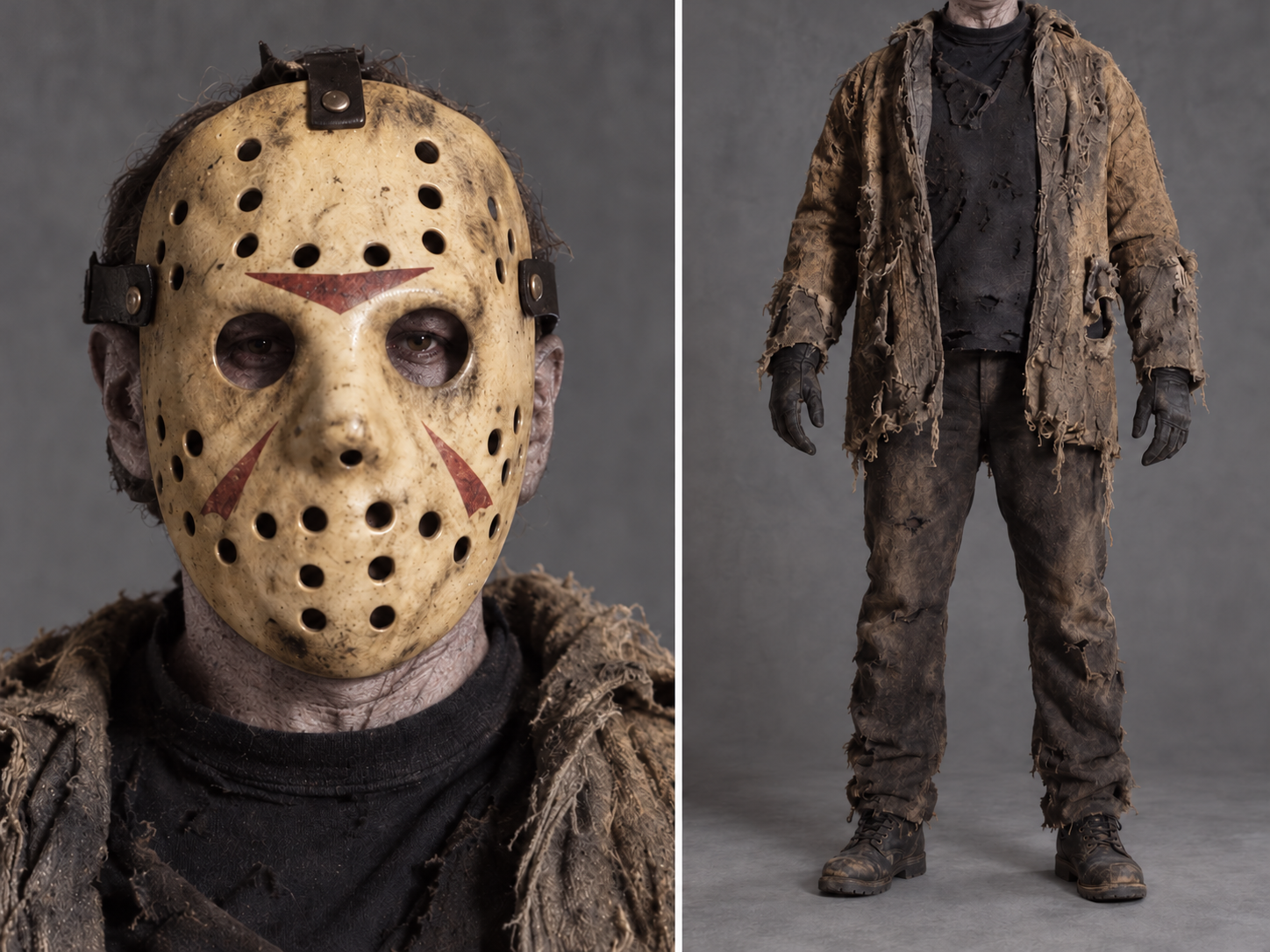
Edit @image1. Replace only the central person with the masked adult man from @image2.

Use @image2 for his exact hockey mask, its shape, ventilation holes, red markings, straps, body build and clothing: a tattered brown jacket, charcoal shirt and dark gloves. Completely replace the original face, hair and bare torso.

Preserve the pose, head tilt, shoulder positions, lowered arms, camera angle and framing from @image1.

Match @image1’s lighting, shadows, color balance, lens softness and film grain. Keep its entire industrial background unchanged.

Do not transfer the weapon, rain, forest, lighting or pose from @image2. His hands remain empty. Add nothing else.USE THIS REFERENCE
Reference mapping:
@image1 = starting frame, character appearance, mask, clothing, industrial interior and existing lighting.

FORMAT: 6s / 1 SHOT / The background ceiling lamp at frame right visibly flickers while a handheld camera slowly zooms toward the nearly motionless masked man / horizontal 4:3.

SUBJECT: The masked adult man from @image1. Preserve his proportions, stance, mask shape, ventilation holes, red markings and visible eye position.

SECONDARY SUBJECT: None.

WARDROBE MAIN SUBJECT: Preserve the exact tattered brown jacket, charcoal shirt, gloves and mask straps from @image1.
WARDROBE SECONDARY SUBJECT: Not applicable.

HERO PROPS: The existing ceiling lamp behind the man at frame right. This specific lamp repeatedly loses power and visibly switches off and back on. Preserve its shape, mounting and position.

ENVIRONMENT: Preserve the industrial interior, beams, background depth and structural geometry. Sparse fine dust drifts through the room.

MOOD: Sustained quiet horror, with restrained character movement and conspicuous electrical instability in the background lamp.

MUSIC: No music or dialogue. Quiet room tone, faint breathing, subtle fabric movement and an intermittent electrical buzz from the faulty lamp.

COLOR LOGIC: Preserve the original muted browns, ivory mask and cool background tones. Only the right background lamp and the illumination it produces fluctuate. The existing frontal fill and cool ambient edge light remain steady.

STYLE: Realistic live-action footage with the source photograph’s soft digicam texture, subdued detail and quiet shadows. Normal real-time movement. No added sharpening, HDR or glossy rendering.

LOGIC RULE: Exactly one man. He remains planted in the same place. His mask stays rigid and secured to his head. The lamp’s electrical flicker is the main environmental action and must be visibly readable. The operator remains in the original location; magnification changes through lens zoom. The filming device never appears.

NEGATIVE PROMPT: No continuously illuminated background lamp, global exposure pulsing, whole-frame flashing, added lights, walking, lunging, mask deformation, glowing eyes, camera orbit, cuts or dense floating particles.
SHOT 1 — 0:00 to 0:06, MS gradually tightening to CU, 35mm equivalent starting lens, slow optical zoom with continuous irregular handheld shake.
Begin from the exact composition of @image1. Establish the faulty lamp immediately: within the first second, the luminous surface of the existing lamp at frame right visibly goes dark, stays dark for roughly a third of a second, then lights up again. Its surrounding glow collapses during the interruption and returns when power recovers. The fixture itself remains in place.

During the next two seconds, the same lamp suffers another uneven burst of two clearly separated power interruptions. Vary their duration between roughly a quarter and half a second, with unequal illuminated pauses between them. Show distinct illuminated and unilluminated states, rather than a barely perceptible brightness shimmer. Nearby surfaces receiving this lamp’s warm light dim and recover in sync. The independent frontal fill and cool ambient illumination remain constant, keeping the man visible.

Keep the lamp within the right side of the composition during the first three seconds through small natural framing corrections. Continue the slow zoom throughout the shot, reaching approximately 1.8x magnification by the end, with the complete mask, head and upper shoulders visible. If the lamp leaves the frame later, its fluctuating light continues affecting the room.

The man stands with his arms lowered. Animate quiet breathing through small chest expansions, restrained shoulder movement and shifting jacket folds. Add a minute natural settling of his neck and weight without taking a step or making a deliberate gesture. His gaze stays toward the camera. The mask never flexes with breathing.

Maintain noticeable, irregular handheld shake throughout: small uneven horizontal and vertical jolts, slight roll and imperfect recentering. Preserve coherent scene geometry and natural momentary motion blur. Focus follows the mask while retaining the original softness.

A few tiny dust motes drift independently at different depths. Particles within the faulty lamp’s illumination briefly catch its light, disappear into shadow when it switches off, then become visible again. Keep the dust sparse and subtle.

Continue breathing, handheld movement and the slow zoom naturally through the final frame.